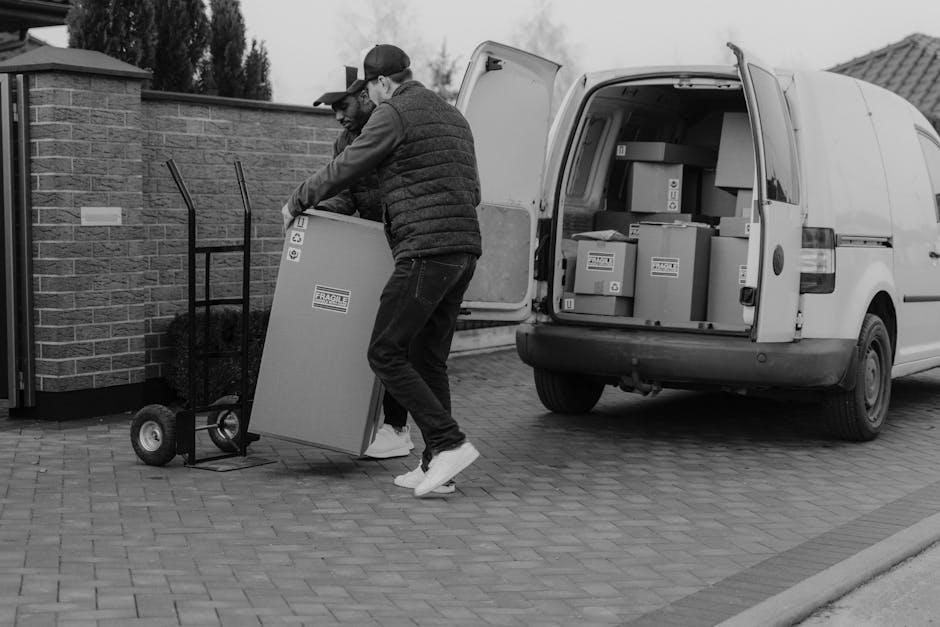
Cutty Sark man with van tips for tight access moves
Posted on 14/06/2026
Cutty Sark Man with Van Tips for Tight Access Moves
If you are planning a move around Cutty Sark and the surrounding Greenwich streets, you already know the issue: the property itself might be perfectly manageable, but the access can be a bit of a headache. Narrow roads, limited parking, shared entrances, basement flats, awkward stairwells, and busy daytime traffic can turn a simple man with van job into a careful piece of planning. That is exactly where Cutty Sark man with van tips for tight access moves become useful. The right approach saves time, reduces damage risk, and helps the whole day feel far less frantic.
In this guide, we will walk through what tight access really means, how a man and van service handles it, what to check before moving day, and the mistakes people often make when they assume "it will be fine". Truth be told, a little preparation goes a long way here.

Why Cutty Sark man with van tips for tight access moves Matters
Cutty Sark and wider Greenwich have a charm that people move for, but the same character that makes the area lovely can make removals more complicated. Older buildings, compact layouts, controlled parking zones, and busy foot traffic all affect how a vehicle can stop, load, and leave. If access is tight, the move is rarely just about carrying boxes. It becomes a coordination job.
That is why a local-friendly man with van approach matters. The service is usually more flexible than a larger removals lorry, which is helpful when the van cannot park directly outside the door. You may need shorter carries, timed arrival, a smaller vehicle, or a plan for shuttle loading. It sounds simple, but in practice the difference between a smooth move and a stressful one often comes down to access planning done early.
For people moving into a flat near the Cutty Sark area, or leaving one, the main problem is not volume alone. It is how the furniture gets from hallway to van without bumping walls, blocking neighbours, or taking twice as long as expected. To be fair, that is the part most people underestimate.
If you are comparing move types, it can help to look at broader support pages too, such as man with a van services in Greenwich and the wider removal services overview. Those pages are useful when you are trying to work out which level of help fits your move.
How Cutty Sark man with van tips for tight access moves Works
At its core, a tight access move is built around three things: planning the route, choosing the right vehicle, and reducing friction at both ends of the move. A good mover will not simply turn up and hope for the best. They will ask about staircases, lift access, parking restrictions, doorway width, road width, and whether there are any loading limitations.
In a Cutty Sark setting, this often means the van may need to stop a little further away than ideal. The team then uses trolleys, shoulder straps, protective blankets, and careful lifting to move items safely over a shorter or longer carry. Sometimes the van can park close enough for a direct load. Sometimes it cannot. The point is to have a plan for both outcomes.
A proper tight access approach usually includes:
- a quick pre-move access check
- an honest discussion about van size
- clear timing for parking and loading
- protective equipment for furniture and property
- backup options if the nearest space is unavailable
That flexibility is what makes a man and van service such a practical choice for Greenwich streets. If you need a broader move with storage in between, it can also be worth looking at storage solutions in Greenwich before you decide on the exact moving plan.
Key Benefits and Practical Advantages
The biggest benefit is obvious: a smaller, more agile setup usually handles tight access better than a large vehicle. But there are several other gains that matter just as much on moving day.
- Less time wasted on awkward positioning. A van can often get closer to the building than a large removals truck.
- Lower risk of property damage. Shorter carries and simpler manoeuvres reduce the chance of scuffed walls or scratched door frames.
- More flexibility. If a space opens up or closes suddenly, a nimble team can adapt more easily.
- Better for partial loads. If you are moving a few key items rather than a whole house, it is a sensible fit.
- More realistic for older streets. Greenwich access can be unpredictable, especially at busier times of day.
Another practical advantage is stress reduction. Sounds obvious, but it matters. When the van and the team are set up for a tricky location, you stop worrying about whether the sofa will get through the entrance or whether the driver will be forced to double-park and rush. You can breathe a bit. And on moving day, breathing is not a small thing.
For larger or more complex home moves, the broader house removals support in Greenwich may be a better match. That is the sort of decision that saves money and hassle if the job is bigger than it first looked.
Who This Is For and When It Makes Sense
Not every move needs a specialist tight access strategy, but many do. If you are close to Cutty Sark, the chances are good that at least one access complication will appear somewhere in the move. Maybe it is a top-floor flat. Maybe it is a one-way street with limited stopping room. Maybe it is a front door that opens onto a narrow stair landing. Little things add up quickly.
This approach makes sense for:
- flat moves in dense residential streets
- students moving into or out of compact accommodation
- people downsizing from a family home to a smaller property
- buyers moving into a property with awkward access
- renters with limited parking and a short turnaround
- businesses relocating a small office or specialist items
If you are in a hurry, the option of same day removals in Greenwich can also be relevant, though only if access details are clear enough for the team to plan properly. Tight access and rushed logistics do not always mix well, so honesty upfront helps more than optimism.
One little rule of thumb: if you think "this is probably fine", it is worth checking twice. The awkward bit is usually not visible from the street anyway.
Step-by-Step Guidance
Here is a straightforward way to handle a Cutty Sark move when access is tight. Keep it simple, but do not skip the boring bits. The boring bits are where the day is won.
- Measure the key access points. Check door widths, stair turns, lift dimensions, corridor width, and any low ceilings or tight corners.
- Identify parking and stopping options. Note where the van could legally stop, how far the carry would be, and whether there is a loading bay or permit issue.
- Sort your items by difficulty. Large wardrobes, beds, glass tables, and pianos need more thought than boxes do.
- Tell the mover the truth about the access. If there is a difficult turn or a long carry, say so. No one benefits from surprises.
- Book the right size vehicle. Smaller is not always better, but a van that can actually get close is often the smarter choice.
- Prepare the property. Move loose items, secure pets, protect floors if needed, and clear the route from room to exit.
- Use protection properly. Furniture blankets, straps, and trolley boards are not optional extras in a narrow space. They are part of the job.
- Build in time for the carry. Tight access almost always takes longer than a driveway move. Plan for it.
If you are moving something delicate, such as a piano or a family heirloom, the rules change again. In that case, specialist handling matters more than speed. For example, piano removals in Greenwich require careful planning even in fairly open spaces, and tight access makes it even more important.
A small note from real life: people often spend ages worrying about the sofa and then forget about the lamps, mirrors, and plant pots. Those are the items that tend to get knocked over while everyone is focused on the bigger stuff. Annoying, but predictable.
Expert Tips for Better Results
These are the kinds of details that tend to separate a decent move from a genuinely smooth one. None of them are complicated. They just need attention.
- Photograph the route. A couple of phone photos of the entrance, stairwell, and parking spot can help the mover spot issues before the day.
- Disassemble where it makes sense. A bed frame or table that looks harmless in the lounge can become awkward in a narrow hallway.
- Pack heavier items in smaller boxes. That sounds obvious, yet people still overpack boxes and then regret it halfway down the stairs.
- Protect communal areas. Shared entrances and hallways deserve the same care as your own space. Neighbours notice this sort of thing.
- Schedule carefully. Early morning can be calmer than late morning in busy parts of Greenwich, though local traffic patterns vary.
- Keep the first-load items accessible. If something is needed early, do not bury it under six boxes and a spare duvet.
Another useful move is to separate "must move by van" from "could go by storage". If you are not ready to place everything in the new property straight away, a short-term holding plan can make the whole process cleaner. That is where packing and boxes support and storage options can work together nicely.
Expert summary: For tight access moves, the best results usually come from reducing uncertainty. Measure carefully, explain the awkward points early, and choose a vehicle size that matches the street, not just the load.

Common Mistakes to Avoid
Most tight access problems are avoidable. Not all, but most. The trouble is that people tend to assume access will "sort itself out" once the van arrives. It rarely does.
- Guessing the parking situation. If parking is uncertain, plan an alternative.
- Underestimating the carry distance. Fifty metres sounds manageable on paper. After three heavy runs, not so much.
- Ignoring stairs and corners. A wide item may fit in theory and still fail in practice because of the turn radius.
- Not telling the mover about difficult items. Heavy mirrors, oversized wardrobes, or awkward exercise equipment should be flagged early.
- Packing last minute. Rushed packing creates fragile boxes, missing labels, and confusion at unloading time.
- Leaving access cluttered. Shoes, bins, bikes, prams, and loose cables all slow things down.
There is also a people mistake, if that makes sense: trying to be helpful in a way that gets in the way. Most crews are happy to have clear information and a clear path, but less keen on constant mid-carry changes. Let them work. It helps everyone.
If you want a broader overview of what professional support can look like, it may help to review the main services overview and then decide whether your job needs a basic man and van setup or something more involved.
Tools, Resources and Recommendations
You do not need a van full of fancy gear, but the right tools make a big difference in tight spaces. In many local moves, the difference between a careful transfer and a messy one is simply having the right kit ready before the first lift.
| Tool or Item | Why It Helps | Best Used For |
|---|---|---|
| Furniture blankets | Protects corners, edges, and painted surfaces | Wardrobes, tables, cabinets, and door frames |
| Removal straps | Improves control on stairs and narrow turns | Heavy or bulky items |
| Two-wheel trolley | Reduces lifting strain over short distances | Boxes, appliances, and stackable items |
| Floor covering | Helps protect communal and private flooring | Entrance halls and shared stairways |
| Strong tape and labels | Keeps packing organised and easier to unload | All room-based moves |
Recommended planning habits are just as important as physical tools. Start with the items that are hardest to move, not the easiest. Confirm the route from the door to the van. Keep an eye on weather if there is an outdoor carry. A wet pavement at 8:00 in the morning can change the whole mood of a move, honestly.
For guidance on how pricing and estimates are usually handled, pricing and quotes information is a sensible place to start. It can help you compare like-for-like rather than just chasing the cheapest headline number.
Law, Compliance, Standards, or Best Practice
Without turning this into a legal lecture, there are some sensible standards worth following. Movers and customers both have a role in keeping the job safe and practical. In the UK, best practice generally means loading in a way that protects people, property, and nearby pedestrians, especially in busy residential streets.
For customers, the important part is honesty and preparation. If access is restricted, say so. If parking is limited, mention it. If a property has stairs, lift restrictions, or awkward internal turns, explain them early. This is not about being overly cautious; it is just how you avoid preventable problems.
For the moving team, the expectation is careful manual handling, suitable vehicle choice, and sensible risk awareness. Good movers will also pay attention to insurance, damage prevention, and safe carrying practices. If you want to understand how those expectations are handled in practice, the site's insurance and safety guidance and health and safety policy are worth reading.
There may also be practical requirements around parking, loading, or building access set by local property managers or the relevant road rules. Those details vary, so it is best not to assume. Check early, and you will usually avoid the worst surprises.
Options, Methods, or Comparison Table
Not every move in the Cutty Sark area needs the same kind of setup. Here is a simple comparison of the common options.
| Method | Best For | Pros | Trade-Offs |
|---|---|---|---|
| Man with van | Small to medium moves, tight access, partial loads | Flexible, agile, often better for narrow streets | Less suited to very large full-house moves |
| Full removals service | Larger homes, more items, higher complexity | More hands, more structure, better for heavy loads | Can be less nimble in restricted access areas |
| Self-move with rented van | Very budget-conscious moves | Lower direct labour cost | Higher stress, more risk, no professional handling support |
| Storage-first approach | Uncertain completion dates or staged moving | Flexible timing, less pressure on move day | Extra step and extra planning needed |
If you are moving from a flat or into one, you may also find flat removals in Greenwich more relevant than a general house move page. And if the move is urgent, the man and van option in Greenwich is often the most practical middle ground.
Case Study or Real-World Example
Picture a typical move near Cutty Sark: a one-bedroom flat, third floor, no lift, narrow staircase, and limited parking out front. The client has a bed frame, two small wardrobes, a sofa, a desk, and around twenty boxes. Nothing outrageous. But the access? That is where the job gets interesting.
In a situation like this, the smarter plan is usually to use a smaller van that can stop as close as possible without causing issues, then work in staged carries. The mover checks the stair turns in advance, confirms the sofa will clear the handrail, and asks the customer to keep the hallway clear. Boxes are grouped by room before loading so unloading is quicker at the other end.
What makes the difference here is not brute force. It is sequencing. The heavier, harder items go out first while everyone is fresh. Fragile items are placed where they will not be crushed. A blanket is used on corners that look vulnerable. And if parking becomes unavailable, the team already knows the backup stopping point.
The move will still feel like a move. Let's be honest, there is no magical version where it turns into a picnic. But it becomes controlled, and that is the real win. By the end, the client is not dealing with chipped paint, strained backs, or a van parked halfway over the pavement. That is the kind of boring success you want.
Practical Checklist
Use this checklist before moving day. It is simple, but useful. The simple things are often the ones that save the day.
- Measure doors, stair turns, and any lift dimensions.
- Check where the van can legally stop.
- Tell the mover about any especially heavy or awkward items.
- Confirm whether parking restrictions apply.
- Clear hallways, entrances, and shared spaces.
- Pack heavy items into smaller boxes.
- Label boxes by room.
- Protect furniture corners and fragile surfaces.
- Prepare a backup plan if the nearest access point is blocked.
- Keep keys, paperwork, and essentials separate and easy to find.
If you are moving items that will not go straight into the new property, consider whether short-term storage or a split move makes more sense. It is not always the cheapest route, but sometimes it is the calmest one.
Conclusion
Cutty Sark moves can be wonderfully local and surprisingly complicated at the same time. Tight access is not a dealbreaker; it is just a planning challenge. With the right van size, honest access details, sensible packing, and a crew that knows how to work in narrow spaces, your move becomes much more manageable.
The main thing to remember is this: do not wait until moving day to think about access. Check it early, describe it clearly, and choose the setup that fits the street rather than forcing the street to fit the move. That little shift in thinking saves time, money, and quite a bit of stress.
If you are still weighing up your options, start with the practical basics, compare services carefully, and use the pages on removals in Greenwich and about the company to get a feel for the support available. A calm move is usually a well-prepared one.
Get a free quote today and see how much you can save.
And if you are moving near the river on a busy morning, take a breath, keep the kettle handy, and remember: a good move is one you can laugh about afterwards, not during.